PART 1 — StatefulSet + Headless Service + Persistent Storage

Goal: Deploy a stateful MySQL cluster correctly in Kubernetes and understand every moving part.
LAB PREREQUISITES (DO NOT SKIP)
You need one working Kubernetes cluster:
- Minikube
Verify:
kubectl get nodes
You must see Ready.
STEP 0 — WHAT WE ARE BUILDING (VISUAL FIRST)
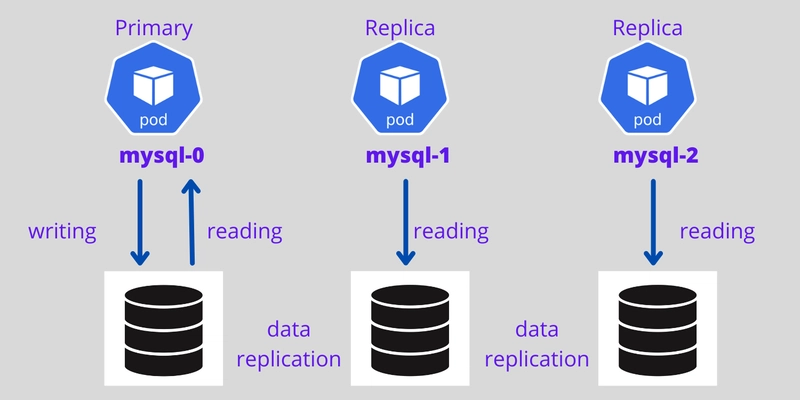

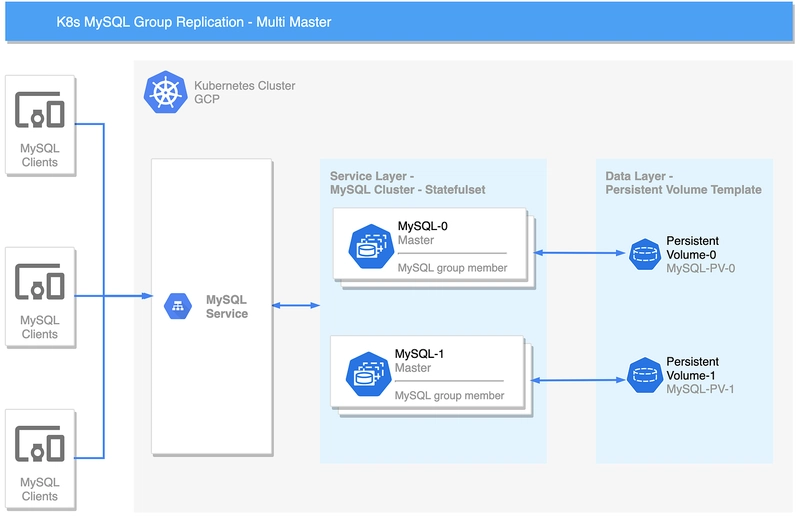
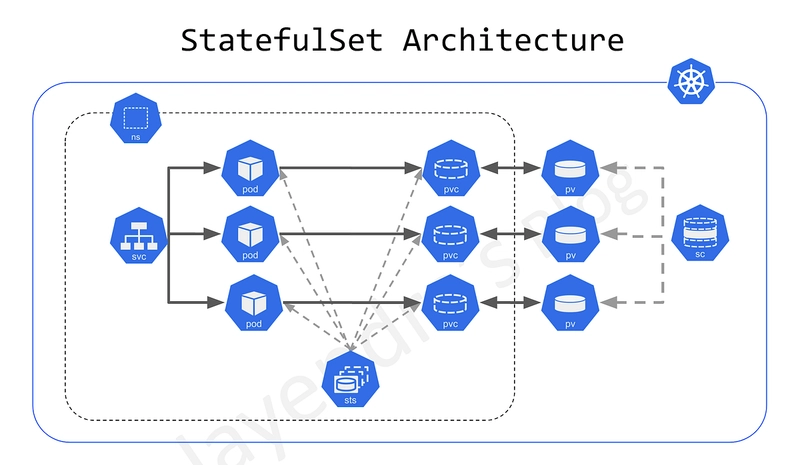
Final architecture
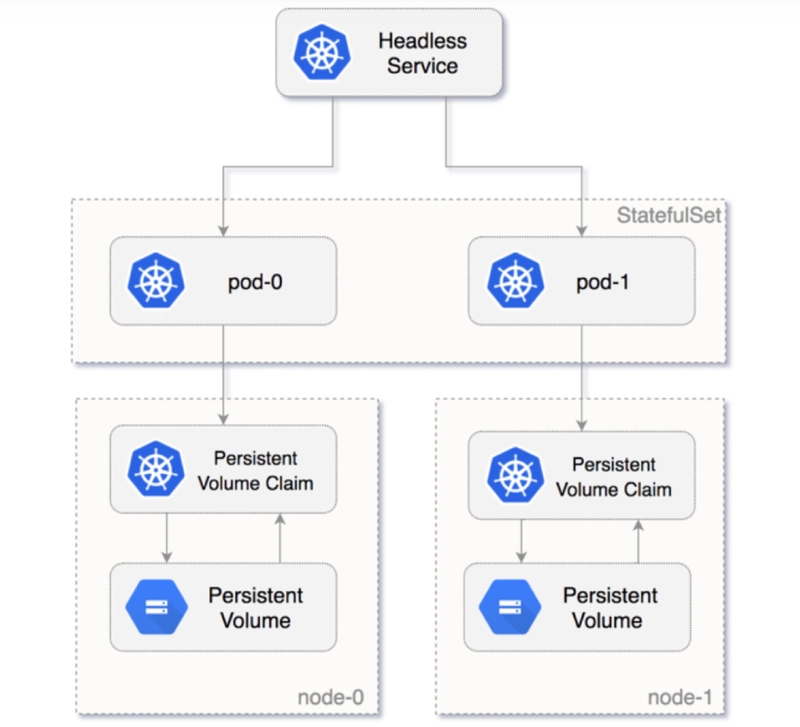
- 1 Headless Service (identity)
- 1 StatefulSet (mysql pods)
- 3 Pods:
mysql-0,mysql-1,mysql-2 - 1 PVC per pod
- Stable DNS names
- Data survives restarts
STEP 1 — CREATE A NAMESPACE (CLEAN ISOLATION)
kubectl create namespace mysql-lab
kubectl config set-context --current --namespace=mysql-lab
Verify:
kubectl get ns
STEP 2 — HEADLESS SERVICE (MOST IMPORTANT FILE)
File: mysql-headless.yaml
apiVersion: v1
kind: Service
metadata:
  name: mysql-headless
spec:
  clusterIP: None
  selector:
    app: mysql
  ports:
    - port: 3306
      name: mysql
Apply:
kubectl apply -f mysql-headless.yaml
Verify:
kubectl get svc
You must see:
mysql-headless ClusterIP None
🔍 WHAT THIS DOES (VISUAL)
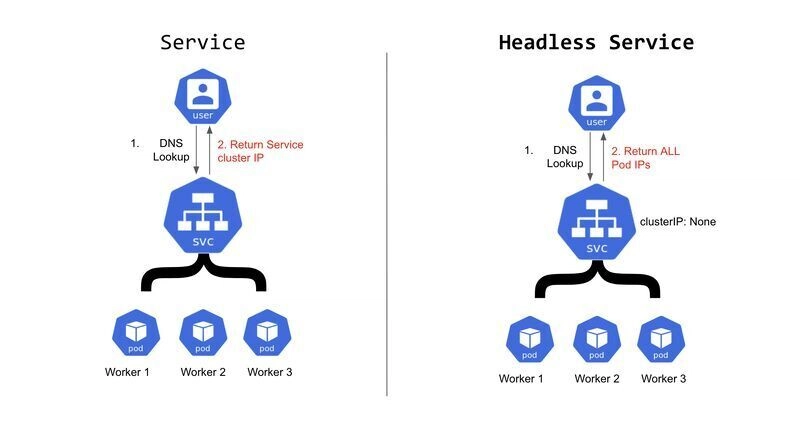
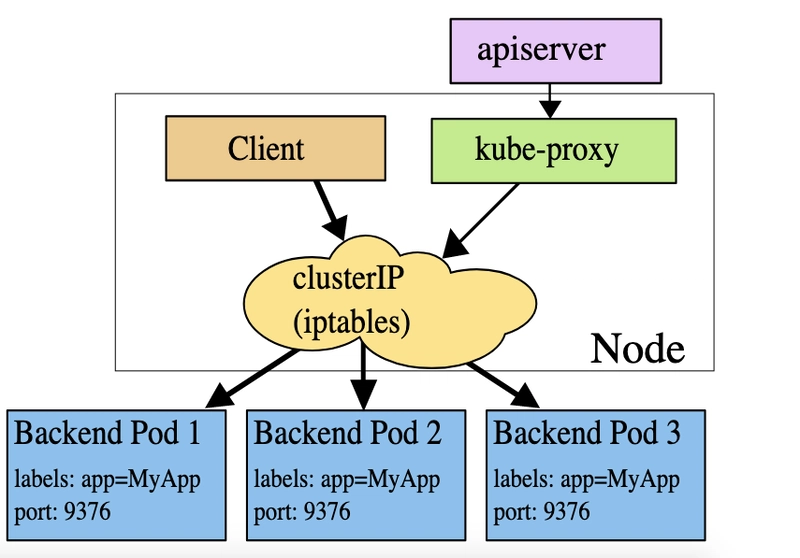
- ❌ No virtual IP
- ✅ DNS returns individual pod IPs
- ❌ No kube-proxy load balancing
- ✅ Enables pod-level DNS
⚠️ Alone this is NOT ENOUGH — identity still missing
STEP 3 — STATEFULSET (THE CORE)
File: mysql-statefulset.yaml
apiVersion: apps/v1
kind: StatefulSet
metadata:
  name: mysql
spec:
  serviceName: mysql-headless
  replicas: 3
  selector:
    matchLabels:
      app: mysql
  template:
    metadata:
      labels:
        app: mysql
    spec:
      containers:
        - name: mysql
          image: mysql:8.0
          env:
            - name: MYSQL_ROOT_PASSWORD
              value: rootpass
          ports:
            - containerPort: 3306
          volumeMounts:
            - name: data
              mountPath: /var/lib/mysql
  volumeClaimTemplates:
    - metadata:
        name: data
      spec:
        accessModes: ["ReadWriteOnce"]
        resources:
          requests:
            storage: 1Gi
Apply:
kubectl apply -f mysql-statefulset.yaml
STEP 4 — WATCH POD CREATION (ORDER MATTERS)
kubectl get pods -w
You will see:
mysql-0  → Running
mysql-1  → Running
mysql-2  → Running
🔍 IMPORTANT
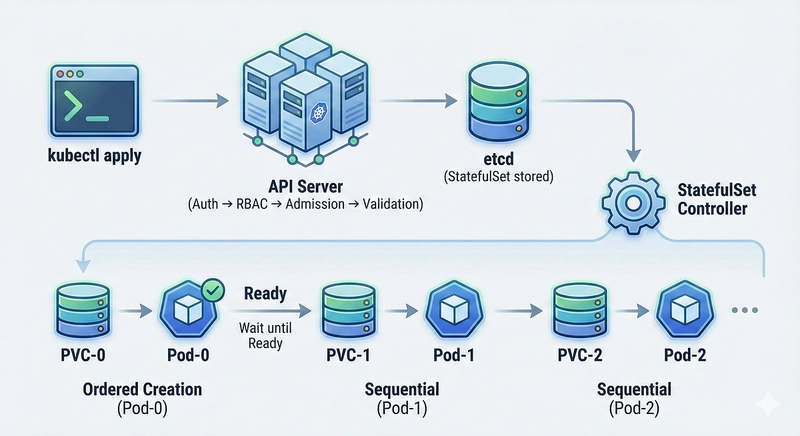
- Pods start one by one
- NOT parallel
- This is guaranteed by StatefulSet
STEP 5 — VERIFY STABLE POD NAMES
kubectl get pods
Expected:
mysql-0
mysql-1
mysql-2
Restart one pod:
kubectl delete pod mysql-1
Watch:
kubectl get pods -w
Result:
-
mysql-1comes back - Same name
- Same identity
VISUAL: DEPLOYMENT VS STATEFULSET
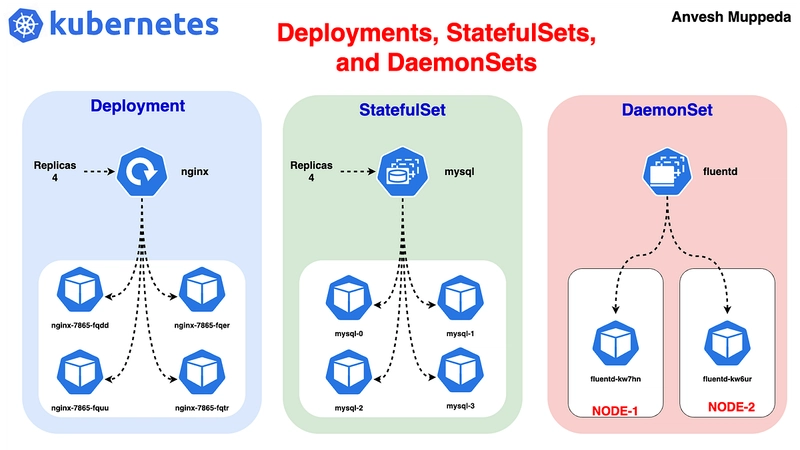
This is why Deployments are unsafe for databases.
STEP 6 — VERIFY PERSISTENT STORAGE
kubectl get pvc
Expected:
data-mysql-0
data-mysql-1
data-mysql-2
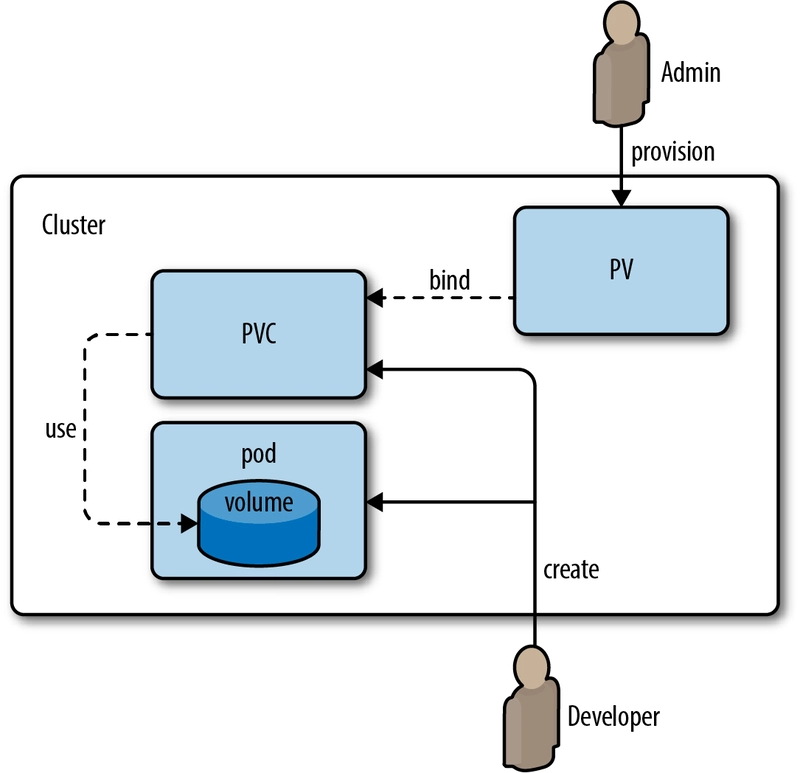
Each pod has:
- Its own disk
- Independent lifecycle
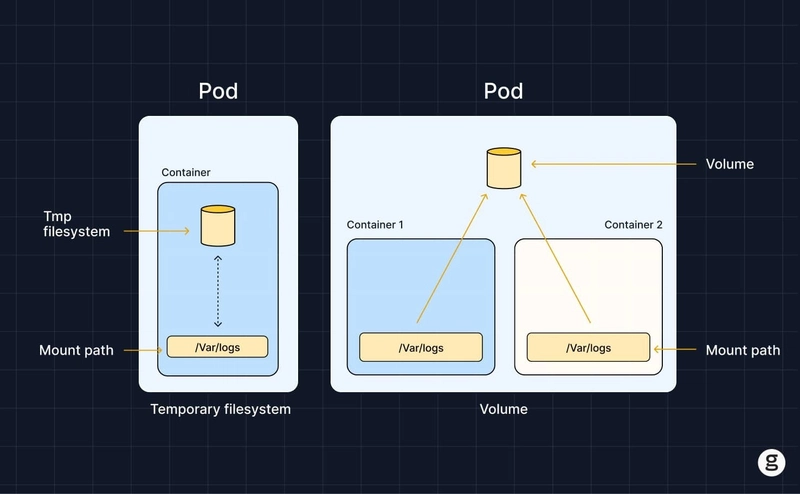
- Data survives pod deletion
VISUAL: VOLUMECLAIMTEMPLATES

STEP 7 — VERIFY DNS (CRITICAL STEP)
Run a temporary client pod:
kubectl run dns-test --image=busybox:1.36 -it --rm --restart=Never -- sh
Inside the pod:
nslookup mysql-0.mysql-headless
nslookup mysql-1.mysql-headless
nslookup mysql-2.mysql-headless
Each resolves to a different IP.
Exit:
exit
VISUAL: POD DNS NAMES
Format:
<pod-name>.<headless-service>.<namespace>.svc.cluster.local
STEP 8 — CONNECT TO MYSQL (REAL TEST)
kubectl exec -it mysql-0 -- mysql -uroot -prootpass
Inside MySQL:
CREATE DATABASE labdb;
USE labdb;
CREATE TABLE test (id INT);
INSERT INTO test VALUES (1);
SELECT * FROM test;
Exit:
exit
STEP 9 — DELETE POD, DATA MUST SURVIVE
kubectl delete pod mysql-0
Wait until it comes back:
kubectl get pods -w
Reconnect:
kubectl exec -it mysql-0 -- mysql -uroot -prootpass
Check:
USE labdb;
SELECT * FROM test;
✅ Data is still there.
VISUAL: DATA SURVIVES POD DELETION
STEP 10 — WHAT THIS LAB PROVES (LOCK THIS IN)
Kubernetes guarantees:
- Stable pod identity
- Ordered startup & shutdown
- Persistent storage
- Predictable DNS
Kubernetes does NOT:
- Replicate MySQL data
- Promote replicas
- Manage DB internals
SENIOR DEVOPS MENTAL MODEL (INTERVIEW READY)
“StatefulSets are required for databases because they provide stable pod identities and ordered lifecycle management. Headless services expose pod-level DNS so clients can target specific replicas. VolumeClaimTemplates ensure each pod has persistent storage that survives restarts.”