Managing Multiple Shopify Stores in 2025: Technical Solutions for Account Isolation and Security

Running multiple Shopify stores has become a common requirement for developers, agencies, and e-commerce professionals. Whether you’re managing client stores, testing different market strategies, or operating separate brands, the technical challenges of maintaining proper account isolation have grown significantly more complex in 2025.
Shopify’s sophisticated detection systems can link stores together through browser fingerprinting, shared payment methods, and behavioral patterns—even when you’re operating legitimate businesses. This article explores the technical infrastructure needed to manage multiple Shopify stores securely while maintaining compliance and avoiding unintended account associations.
Why Developers and Agencies Run Multiple Shopify Stores
Before diving into technical solutions, it’s important to understand the legitimate use cases that require multi-store management infrastructure:
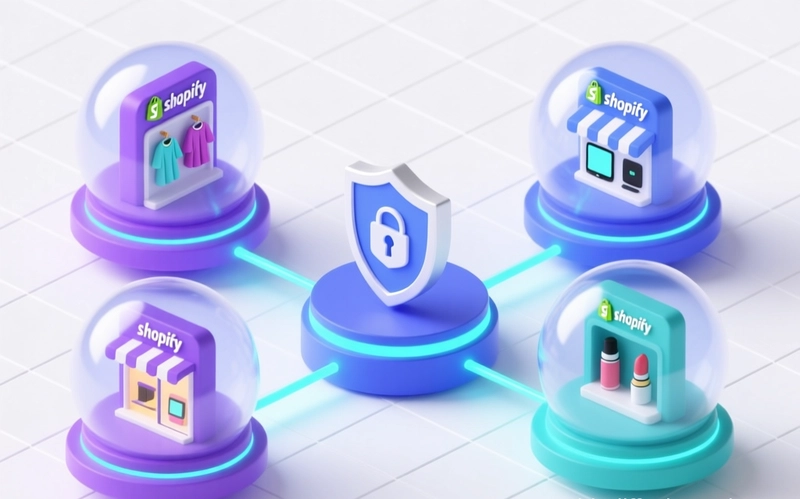
Agency Operations: Development agencies routinely manage dozens of client Shopify stores simultaneously. Each client requires isolated access, separate billing, and independent store configurations. Cross-contamination between client accounts can create serious professional liability issues.
Market Testing and Expansion: E-commerce businesses often test new product lines or geographic markets through separate Shopify stores before integrating successful experiments into their main operation. This approach allows for isolated analytics, different branding strategies, and market-specific customization.
White-Label Solutions: Developers building white-label Shopify applications need to test across multiple store environments with different configurations, themes, and app combinations. A single testing environment cannot replicate the diverse scenarios encountered in production.
Multi-Brand Operations: Many e-commerce operators manage multiple distinct brands, each requiring its own Shopify store with separate inventory, customer databases, and marketing strategies. These are completely legitimate separate businesses that happen to be owned by the same entity.
The challenge is that Shopify’s anti-fraud systems—designed to prevent abuse—often flag these legitimate use cases as suspicious activity.
How Shopify Detects and Links Multiple Accounts
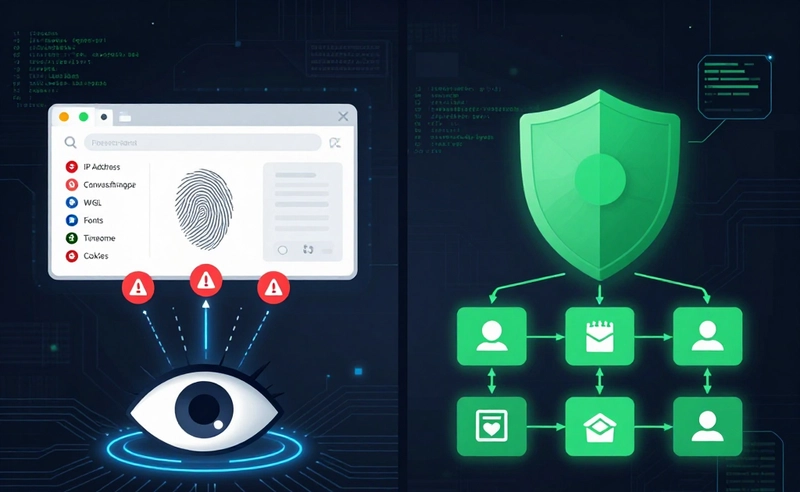
Understanding detection mechanisms is crucial for implementing proper isolation. Shopify’s platform uses several sophisticated techniques to identify related stores:
Browser Fingerprinting: Every time you access Shopify, your browser transmits dozens of identifying parameters: canvas fingerprints, WebGL renderer information, installed fonts, screen resolution, timezone settings, language preferences, and hardware specifications. Even if you use different email addresses or clear cookies, identical fingerprints can link your stores together.
IP Address Correlation: Accessing multiple stores from the same IP address creates an obvious connection point. However, simply rotating IPs isn’t sufficient—Shopify also analyzes IP geolocation consistency, ISP information, and network characteristics.
Behavioral Patterns: The platform monitors how you interact with the admin panel: typing speed, mouse movement patterns, navigation habits, and time-of-day activity. These behavioral biometrics can identify the same operator across different accounts.
Payment and Business Information: Shared credit cards, bank accounts, business registration details, or phone numbers create direct links between stores. This extends to payment processors, fulfillment services, and third-party integrations.
Session Persistence: Cookies, localStorage, and other browser storage mechanisms maintain state across sessions. Even after logging out, residual data can associate subsequent logins with previous activity.
The complexity of these detection methods means that simple solutions like incognito mode or VPNs provide inadequate isolation for serious multi-store operations.
Technical Requirements for Proper Store Isolation
Effective multi-store management requires a comprehensive technical approach addressing each detection vector:
Complete Browser Environment Separation: Each Shopify store needs its own isolated browser environment with unique fingerprints. This means separate canvas fingerprints, distinct WebGL parameters, different installed fonts, and unique hardware configurations. The environments must remain consistent over time—randomly changing fingerprints triggers different security flags.
Network Identity Management: Each store should operate from a consistent IP address that matches its business location and profile. For a store targeting Canadian customers with Canadian business registration, the accessing IP should originate from Canada. Mixing geolocations creates red flags in Shopify’s fraud detection systems.
Storage Isolation: Cookies, cache, localStorage, and IndexedDB must be completely separated between stores. Any shared storage creates linkage opportunities that sophisticated detection systems can exploit.
Time and Location Consistency: The timezone, language settings, and geolocation data presented by the browser should align with the store’s business profile. A store registered in Germany accessed with US timezone settings and English-US browser language creates inconsistencies that trigger review.
Operational Security: Beyond technical measures, operational practices matter. Each store should have dedicated email addresses, separate business documentation, distinct payment methods, and independent third-party service accounts for analytics, marketing, and fulfillment.
Antidetect Browsers: The Developer’s Solution for Multi-Store Management

Traditional browsers—even with VPNs and extensions—cannot provide the level of isolation required for professional multi-store operations. This is where antidetect browser technology becomes essential for developers and agencies.
Antidetect browsers are specialized tools designed to create isolated browsing environments with unique, consistent fingerprints for each profile. Unlike standard browsers that leak identifying information across sessions, antidetect browsers implement deep modifications to prevent cross-profile correlation.
How Antidetect Browsers Work: These tools modify core browser APIs to present different hardware and software configurations for each profile. They control canvas rendering, WebGL output, audio context fingerprints, font enumeration, and dozens of other identifying parameters. Importantly, they maintain consistency—each profile presents the same fingerprint across sessions, avoiding the suspicious randomness that simple spoofing tools create.
Profile Management: Modern antidetect browsers allow you to create separate profiles for each Shopify store, with each profile maintaining independent cookies, cache, and storage. You can configure proxy settings, timezone, language, and geolocation per profile, ensuring each store operates in its own isolated environment.
**Team Collaboration: **For agencies managing multiple client stores, antidetect browsers often include team features allowing controlled access sharing. You can grant developers access to specific store profiles without exposing credentials or compromising isolation between different clients.
**Integration with Development Workflows: **Professional antidetect browsers support automation frameworks and API access, allowing integration with your existing development and testing workflows. You can programmatically manage profiles, automate routine tasks, and maintain separation without manual profile switching.
Selecting the Right Antidetect Browser for Shopify Operations

Not all antidetect browsers are created equal. For Shopify store management, specific features are critical:
Fingerprint Quality: The browser must generate realistic, consistent fingerprints that match real device profiles. Poor fingerprinting implementations create obviously spoofed signatures that trigger immediate flags.
Proxy Integration: Seamless proxy configuration per profile is essential. Look for browsers supporting HTTP, SOCKS5, and residential proxy types with automatic IP rotation and geolocation matching.
Storage Isolation: Verify that the browser completely separates cookies, localStorage, IndexedDB, and cache between profiles. Incomplete isolation defeats the purpose of using specialized tools.
Update Frequency: Browser fingerprinting techniques evolve rapidly. Choose solutions that regularly update their fingerprinting engines to match current detection methods.
Cost Structure: Pricing models vary significantly. Some browsers charge per profile, others offer unlimited profiles with feature tiers. For agencies managing many stores, flat-rate or high-profile-count plans provide better economics.
For developers and agencies serious about Shopify multi-store operations, BitBrowser offers a compelling solution with robust fingerprinting technology, extensive proxy support, and pricing structures designed for professional use. The platform provides the technical foundation necessary for secure, scalable multi-store management without the complexity of enterprise-level alternatives.
Best Practices for Multi-Store Operations
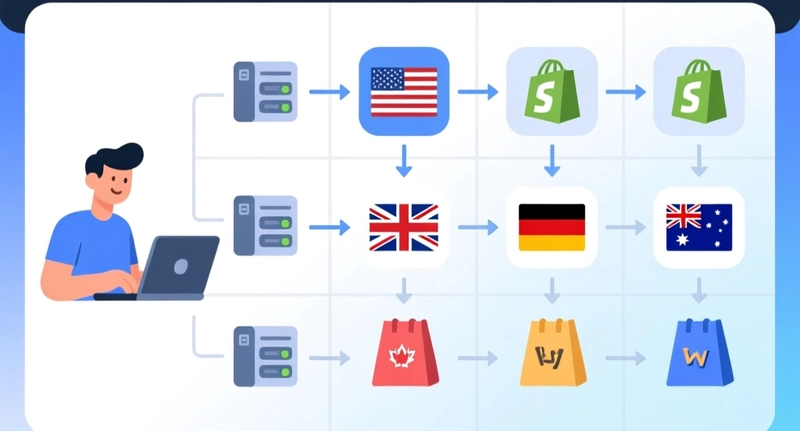
Beyond technical tools, operational discipline is crucial:
Document Your Infrastructure: Maintain detailed records of which profiles correspond to which stores, including proxy configurations, login credentials, and business documentation. This prevents accidental cross-contamination and simplifies team handoffs.
Establish Access Protocols: Create clear procedures for who accesses which stores and when. Avoid having multiple team members accessing the same store from different locations or profiles, which creates confusing behavioral patterns.
Monitor for Anomalies: Regularly review Shopify’s security notifications and account health indicators. Early detection of association issues allows for corrective action before accounts face restrictions.
Separate Business Operations: Beyond browser isolation, maintain truly separate business entities where appropriate. Distinct business registrations, bank accounts, and EINs or business numbers provide legitimate separation that technical measures alone cannot achieve.
Stay Within Terms of Service: Antidetect browsers are tools for legitimate multi-store operations, not mechanisms for violating platform policies. Understand Shopify’s acceptable use policies and ensure your operations comply with their terms of service.
The Future of Multi-Store Management
As e-commerce continues growing, so will the sophistication of platform detection systems. Shopify and similar platforms invest heavily in machine learning-based fraud detection that analyzes patterns across millions of stores.
For developers and agencies, this means technical solutions must evolve continuously. Simple workarounds become obsolete quickly, while professionally maintained antidetect browser platforms invest in staying ahead of detection advances.
The shift toward legitimate multi-store operations requiring proper isolation tools represents a maturation of the e-commerce ecosystem. Just as developers use containers for application isolation or VPNs for network security, antidetect browsers have become standard infrastructure for professional multi-account management.
Conclusion
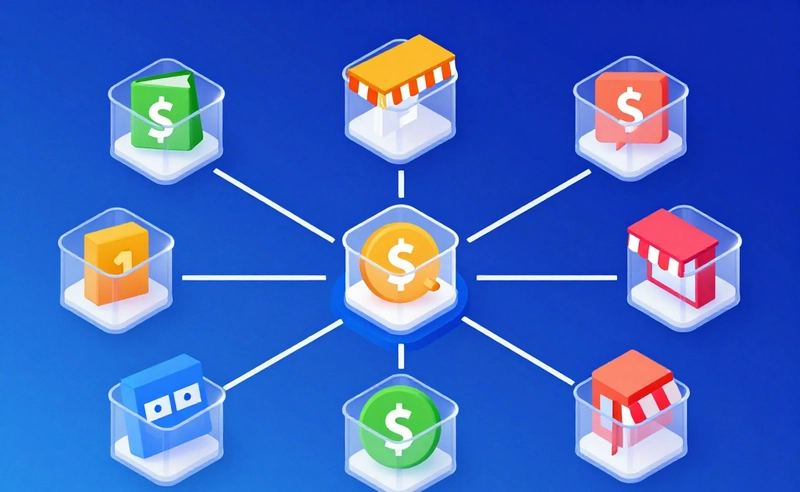
Managing multiple Shopify stores in 2025 requires understanding both the technical detection mechanisms platforms employ and the professional tools available to maintain proper isolation. Browser fingerprinting, IP correlation, and behavioral analysis create a complex detection landscape that simple solutions cannot address.
For developers, agencies, and e-commerce professionals operating legitimate multi-store businesses, antidetect browsers provide the necessary technical foundation. These specialized tools offer the browser environment isolation, fingerprint management, and operational security required for sustainable multi-store operations.
The key is approaching multi-store management as an infrastructure problem requiring professional solutions, not as a quick hack. With proper tools, clear procedures, and attention to both technical and operational security, managing multiple Shopify stores becomes a scalable, sustainable component of your e-commerce or development business.
As the e-commerce landscape continues evolving, investing in proper multi-store infrastructure protects your business from account issues while enabling the operational flexibility that modern digital commerce demands.