
Ethereum’s 2025 Endgame: 60M Gas Blocks, EIL Cross-L2 Architecture, ARBOS Unification & On-Chain Fan Identity

Ethereum is closing out 2025 with some of the most structural upgrades we’ve seen since The Merge.
Base-layer throughput is expanding, rollups are becoming more interoperable, custom chains are getting safer to operate, and real-world identity apps are finally proving mainstream Web3 utility.
This article breaks down four major developments shaping the next era of Ethereum and L2 ecosystems:
- Ethereum L1 gas limit raised to 60M
- Launch of the full EIL (Ethereum Interoperability Layer) architecture
- Arbitrum Orbit’s unified ARBOS upgrade guidelines
- Soneium × Sony’s IRC fan-identity app, a real example of consumer Web3
Let’s go through each — and why they matter for builders heading into 2026.
1. Ethereum L1 Scaling: Gas Limit Raised to 60M
What changed
On 25 November 2025, Ethereum validators pushed the block gas limit from 45M → 60M.
This wasn’t a hard fork — it was a validator-driven increase once votes passed the required threshold.
Result: ~33% more computation per block.
Why it matters
More gas means:
- Bigger L2 batches and calldata
- Larger contract interactions without hitting block limits
- A cleaner runway for upcoming data-availability improvements
- Higher throughput for heavy dApps
It doesn’t magically reduce fees, but it expands headroom during peak demand — especially for rollups.
Quick Throughput Illustration
 Block Gas Limit Over Time
 ┌──────────────────────────────────────┐
60M ┤ ██████████████████████████████████
45M ┤ ███████████████████
30M ┤ ██████
15M ┤ ██
 0  ┼──────────────────────────────────────
     2023        2024       Nov 2025 →
What to watch
Gas-limit governance remains dynamic.
If validator adoption continues and blob throughput increases via upcoming BPO1 and BPO2 (Blob Parameter Only) mini-forks, 2026 could see significantly smoother L2 settlement.
2. EIL: The Ethereum Interoperability Layer Is Here
The full architecture release of EIL might be the most important UX shift Ethereum has attempted since account abstraction.
What is EIL?
EIL (Ethereum Interoperability Layer) is a framework that lets wallets treat many rollups as one unified environment.
It builds on ERC-4337 to allow:
- Seamless cross-rollup operations
- Atomic multi-chain UserOps
- One-gas-payment-for-everything
- No bridging steps
- No chain switching
The goal is simple:
Kill L2 fragmentation.
Core Components
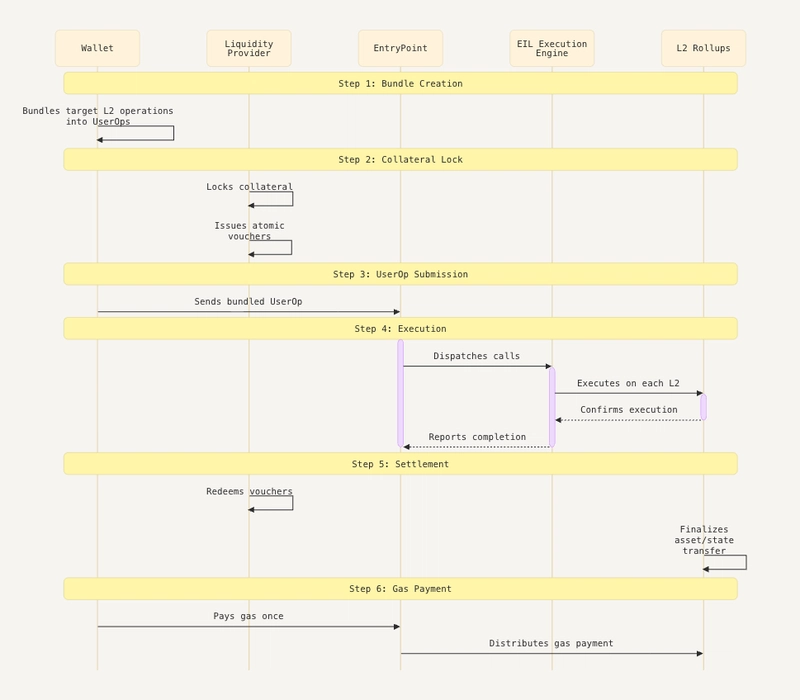
Atomic Vouchers
On-chain instruments from liquidity providers that enable trustless cross-rollup transfers.
Multi-Chain Execution Engine
Bundles UserOps across L2s and executes them atomically.
Cross-Chain Gas Abstraction
Users pay gas once. EIL handles the distribution across all rollups involved.
Wallet Integration Layer
Wallets stay self-custodial. No proprietary relayers.
Workflow Diagram
What’s live today
- Public testnet across Sepolia + several L2s
- SDKs, bundlers, and docs
- Still not production-ready — R&D phase
Why it matters
If EIL gains adoption:
- Bridges become invisible
- Chain switching disappears
- Multi-rollup apps feel “monolithic”
- Liquidity becomes more unified
This is exactly the UX most users always wanted but never got in the multi-L2 world.
3. Arbitrum Orbit: Unified ARBOS Upgrade Guidelines
Running a custom rollup is powerful — but historically messy.
Arbitrum just solved a huge operational headache with its unified ARBOS upgrade template.
What changed
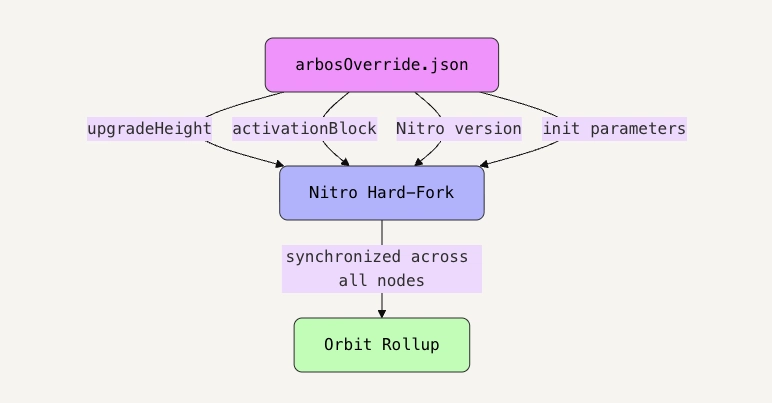
Orbit rollup operators must now define:
- Activation height or timestamp
- Nitro version
- Initialization parameters
- All upgrade values inside
arbosOverride
Every node in the rollup must share identical parameters.
No more config drift. No more surprise consensus issues.
Orbit chains must also stay aligned with upstream Arbitrum releases to maintain compatibility — helping operators avoid unexpected breakage.
Why this matters
Before:
Upgrades were error-prone. One misconfigured node could break the chain.
Now:
Upgrades are auditable, predictable, and safe.
This is critical as the ecosystem grows with more app-specific rollups, gaming chains, and enterprise deployments.
Architecture Diagram
Unified upgrade paths are now table stakes for any serious rollup operator.
4. Real-World Identity Goes On-Chain: Soneium × Sony IRC App
A very different — and refreshing — type of Web3 launch happened recently.
Sony’s L2, Soneium, introduced the IRC App: a fan-identity + engagement system powered by account abstraction.
What the app does
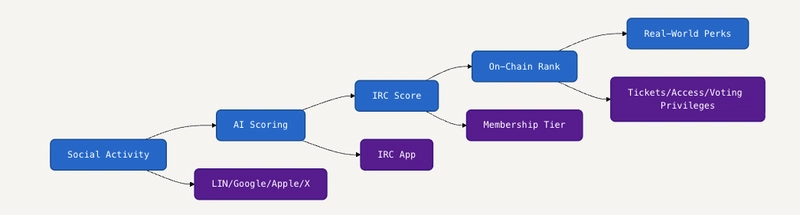
- Connects with LINE, Google, Apple, X
- Converts social engagement and sentiment into an on-chain fan score
- Issues membership ranks (Regular → Gold)
- Unlocks perks like ticket access, events, voting rights
- Offers a fully gasless onboarding experience
- No wallet setup needed — AA handles everything
Why it matters
This is one of the clearest real-world examples of Web3 identity used for:
- Membership
- Reputation
- Culture
- Entertainment
- Community-building
Not DeFi. Not speculation.
Actual value for ordinary consumers.
System Flow
(unchanged)
If other brands follow this pattern, Web3 identity may finally break out of crypto circles.
5. What This Signals for 2026 (Builder Perspective)
Here’s the honest outlook:
- Multichain UX is finally moving forward — EIL could make L2 fragmentation a historical footnote.
- Rollup infra gets safer — Unified ARBOS templates reduce operational risk.
- Ethereum L1 has more room to breathe — 60M gas helps both rollups and heavy dApps.
- Identity is going mainstream — Soneium’s IRC app is a blueprint for consumer adoption.
- New dApp categories are now viable — cross-rollup DeFi, loyalty apps, fan engagement tools, identity-driven platforms.
2026 is shaping up to be the year Ethereum becomes more than a base chain.
It’s becoming an ecosystem-level operating system for consumer and enterprise Web3.
Conclusion
Late 2025 isn’t just a batch of updates — it’s a turning point.
Ethereum is evolving into a platform with:
- unified infrastructure
- seamless multi-chain UX
- safer rollup operations
- real-world identity adoption
If you’re building in 2026, these upgrades are not optional.
They’re the new minimum requirement for competitive dApp design.
Now is the moment to adapt, experiment, and ship.