Wealth Gap Sparks Controversy Over Proposed California Billionaire Tax

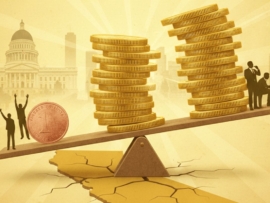
A proposal to levy a one-time tax on California’s billionaires has ignited a political and cultural clash that reaches far beyond Silicon Valley boardrooms, deepening tensions over wealth, responsibility, and who pays to keep the state running.
The issue is quickly turning into a broader argument about what the state owes its people and what its billionaires owe back to the place that made them rich.
At the center of the debate is the proposed California Billionaire Tax Act, a ballot initiative that would impose a one-time 5% tax on residents worth more than $1 billion.
Supporters say the money could help fund schools, food assistance, and healthcare programs at a moment when budget pressures are growing, and inequality feels increasingly hard to ignore. Supporters estimate it could raise up to $100 billion if most of the state’s 200-plus billionaires remain.
Opponents warn the measure could backfire, pushing some of the state’s wealthiest residents out of California altogether.
Tech leaders unsure whether to pay up or pull out
The reaction from the ultra-wealthy has been sharply divided. Jensen Huang, the chief executive of Nvidia and one of the wealthiest people in the world, has emerged as an unlikely symbol of acceptance. Speaking this week, Huang said he was “perfectly fine” with the tax.
“We chose to live in Silicon Valley,” he said. “And whatever taxes they would like to apply, so be it.”
While Huang framed the levy as part of the social contract that comes with building companies in California’s innovation ecosystem, that attitude separates him from other tech figures who have made it clear they are looking for the exits. Google co-founders Larry Page and Sergey Brin have moved business entities out of the state. Palantir co-founder Peter Thiel and venture capitalist David Sacks have both pointed toward Florida and Texas, states with no income tax and far friendlier political climates for the ultra-wealthy.
Unfortunately, their exits come off as a warning that taxing concentrated wealth will accelerate an exodus of capital, talent, and jobs.
On social media, critics of the proposal have gone even further, accusing supporters of waging a war on innovation and success. Some investors have even floated the idea of funding primary challenges against elected officials who support the tax.
A widening wealth gap fuels public rage
While the billionaire class is up in arms, outside Silicon Valley, the threats to flee have landed very differently. For many Californians struggling with rising rents, healthcare costs, and food prices, the idea that billionaires would uproot themselves over a one-time tax has only deepened resentment over the state’s wealth gap.
California is home to more billionaires than any other state, yet it also has one of the nation’s highest poverty rates when adjusted for cost of living.
According to a report from the Public Policy Institute of California, those near the top of the wealth distribution (80th percentile) have a net worth over 100 times higher than those near the bottom (20th percentile).
‘Life isn’t fair’
Odds are you’ve heard the phrase, but when it comes to the wealth disparity in California, it is highly applicable.
The initiative is being led by the Service Employees International Union–United Healthcare Workers West, which represents healthcare workers across the state. Union leaders argue the tax would help stabilize healthcare systems already strained by staffing shortages and federal cutbacks.
Suzanne Jimenez, the union’s chief of staff, has said it is unreasonable for working families to shoulder higher effective tax rates than those who have benefited most from California’s economy. “Asking those who gained the most to contribute more is a reasonable step,” she has argued, particularly as safety-net programs face cuts.
Jimenez has framed the measure as a question of basic fairness. Working people, she argues, already shoulder a heavier tax burden than the ultra-rich, even as public services face cuts. Allowing billionaires up to five years to pay, she added, makes the tax far from punitive.
Supporters also say the tax is designed to be manageable, as billionaires would have up to five years to pay, spreading the cost over time. They argue the revenue could mean the difference between clinics staying open or closing, and between students receiving support or falling by the wayside.
Political fault lines
The proposal has created unusual alliances and rifts among Democratic leaders. Governor Gavin Newsom has fought the measure, warning that a state-level wealth tax could trigger a “race to the bottom” as the wealthy seek out friendlier jurisdictions.
At a recent business summit, Newsom argued that California cannot isolate itself from competition with other states. “We’re in a competitive environment,” he said, echoing concerns long raised by business groups.
Representative Ro Khanna, who represents Silicon Valley, counters that view. He argues that California’s tech ecosystem is too valuable for most billionaires to abandon, even with a one-time tax. When Thiel hinted at leaving, Khanna invoked Franklin D. Roosevelt’s famous jab at wealthy critics: “I will miss them very much.”
What voters may ultimately decide
Economists and policy analysts remain divided over what would actually happen if the tax passes. Critics warn that even a small number of departures could dent revenues and increase volatility. Supporters point to states such as Washington and Massachusetts, which have raised billions through wealth-related taxes without seeing their richest residents disappear.
For voters, the issue may ultimately hinge less on billionaire behavior than on everyday experience. Teachers, nurses, and service workers interviewed across Los Angeles and the Bay Area consistently describe a sense that the state’s prosperity has not trickled down. Regardless of which big city in California you make your way through, the wealth disparity is clear.
The initiative will require significant support, with nearly 875,000 signatures needed to qualify for the November ballot.
Whatever happens, the fight has already prompted a question that the state of California can no longer avoid: in a place defined by both extraordinary wealth and extreme hardship, how much should those at the top be asked to give back, and what does it say when some would rather leave?
Also read: Seven tech predictions enterprise leaders are watching in 2026.